Sewer odor from drains is the plumbing system's check-engine light — the smell is information about a specific failure, and decoding it correctly leads to the right fix instead of the air freshener. This guide covers the causes in order of likelihood and the fixes that actually work.
The most common cause is the dry trap: the U-bend under every drain holds a water seal blocking sewer gas, and in unused fixtures — guest bathrooms, basement floor drains, laundry sinks — that water evaporates. The fix is pouring water down the drain, and the prevention is making trap-priming routine for little-used fixtures. If the smell vanishes, that was it.
The second cause is venting problems: the vent stack that lets the drainage system breathe can block (nests, ice, debris), creating pressure fluctuations that siphon traps dry or push gas through. Gurgling alongside the odor points here — the system is gasping, and the vent needs clearing.
The third cause is the wax ring or fixture seal: the ring sealing toilet to flange degrades, letting gas escape at the base. Odor concentrated around a toilet's base, sometimes with slight rocking of the fixture, is the signature — the fix is resetting the toilet with a new seal.
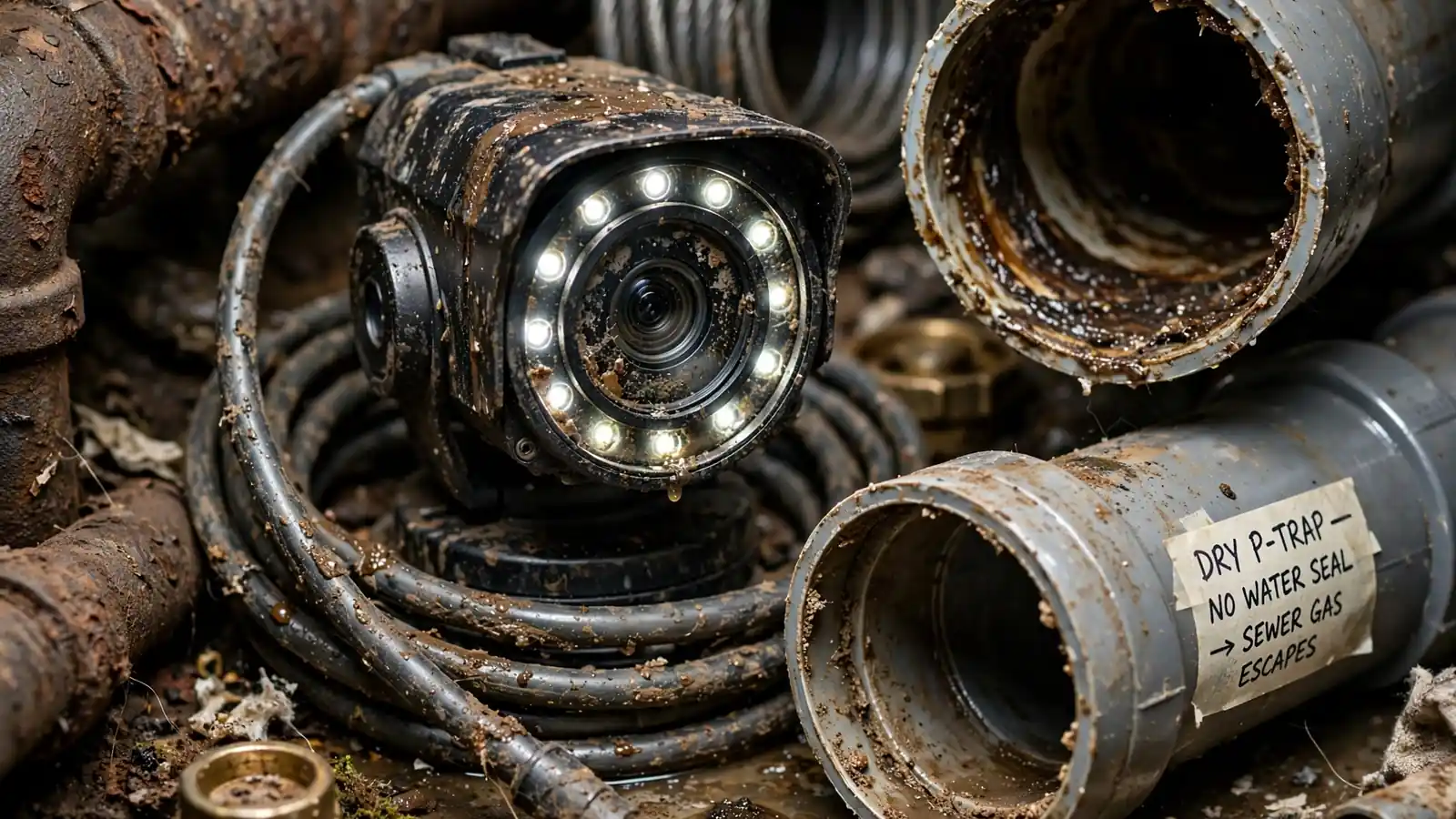
The fourth cause is buildup: bacterial growth on the pipe walls of a restricted drain produces odor even without a gas-path failure. Slow drainage plus odor from one fixture suggests the line needs cleaning — the scouring removes the source, not just the smell. Our sewer line cleaning page covers the remedy.
The fifth cause is the serious one: a breached lateral or blockage forcing gas back through the system. Odor from multiple drains, especially with slow drainage or gurgling across the house, implicates the main line — and the camera inspection finds the blockage, crack, or separation responsible. Our sewer leak detection page covers the detection side.
Seasonal notes for the area: winter's dry heated air evaporates traps faster (check the guest bath in January), and heating-system negative pressure can pull gas through marginal seals. Spring's wet season can pressurize systems with infiltration. The season is a clue — report it when you call (833) 713-2101, because it narrows the diagnosis.
The response rule: single-fixture odor gets the trap check first; multi-fixture or persistent odor gets professional diagnosis. Masking the smell without finding the cause is the only wrong answer — the odor is the system telling you something, and the something is fixable.
The fixture-by-fixture diagnostic is the homeowner's first tool: test each drain individually — run water, wait, sniff — to isolate whether the odor is one trap or systemic. The isolated case gets the trap fix; the systemic case gets the professional call. Ten minutes of methodical checking beats hours of guessing.
The vent-stack check from the ground: visible blockages at the roof vent (nests, debris, ice dams in winter) are sometimes spottable with binoculars — the safe homeowner inspection that occasionally solves the mystery without a service call.
The renovation caution: new bathrooms, moved fixtures, and remodeled drains change trap and vent dynamics — post-renovation odors often trace to the changed plumbing, and the installer's venting work deserves the first skeptical look.
In Marlborough-area homes, the smell's source often traces to the property's era: the dry basement floor drain in the pre-1940 house, the failed wax ring in the 1970s subdivision bath, the compromised vent flashing on the roof after a harsh winter. Each has a distinct smell profile and a distinct fix — and the diagnostic visit distinguishes them in under an hour.
FAQ
Questions
Frequently Asked Questions
If a dry trap was the cause, yes — just make priming routine for that fixture. If the odor returns, the cause is structural (vent, seal, or lateral) and needs diagnosis: (833) 713-2101.
Most likely that bathroom's trap (dry from disuse), its toilet's wax ring, or its vent. Check the trap first — the cheapest fix — then escalate if it persists.
When multiple drains smell, especially with slow drainage or gurgling, the main lateral is implicated — blockage or breach forcing gas back. The camera inspection gives the definitive answer.
Typical household concentrations are a nuisance, but persistent strong odor warrants prompt diagnosis — prolonged exposure causes headaches and nausea, and the underlying failure needs fixing regardless.