A sewer maintenance plan is scheduled care for your lateral — the routine that keeps small issues small and emergencies rare. This guide explains what plans include, how intervals are set, what they cost in principle, and how to tell a genuine maintenance program from a subscription in disguise.
The foundation is the baseline camera inspection: the footage documenting your pipe's material, condition, joints, and defects becomes the reference for every future visit. Without a baseline, maintenance is guessing; with one, it is tracking — each visit's footage compared against the original, trends identified, interventions timed.
The work itself is uncomplicated: cleaning matched to the pipe — hydro jetting for grease and sludge, cabling for roots, descaling for cast-iron tuberculation — performed on intervals the baseline sets. Clay under mature trees earns annual attention; cast iron earns descaling every few years; young PVC earns infrequent checks. The pipe's profile writes the schedule.
Trend monitoring is the plan's superpower and the feature that separates maintenance from repeated service calls. A joint separation widening between inspections, scale thickening year over year, infiltration increasing after wet seasons — the camera catches these while they are still maintenance items, scheduling the lining or repair as a planned project instead of an emergency.
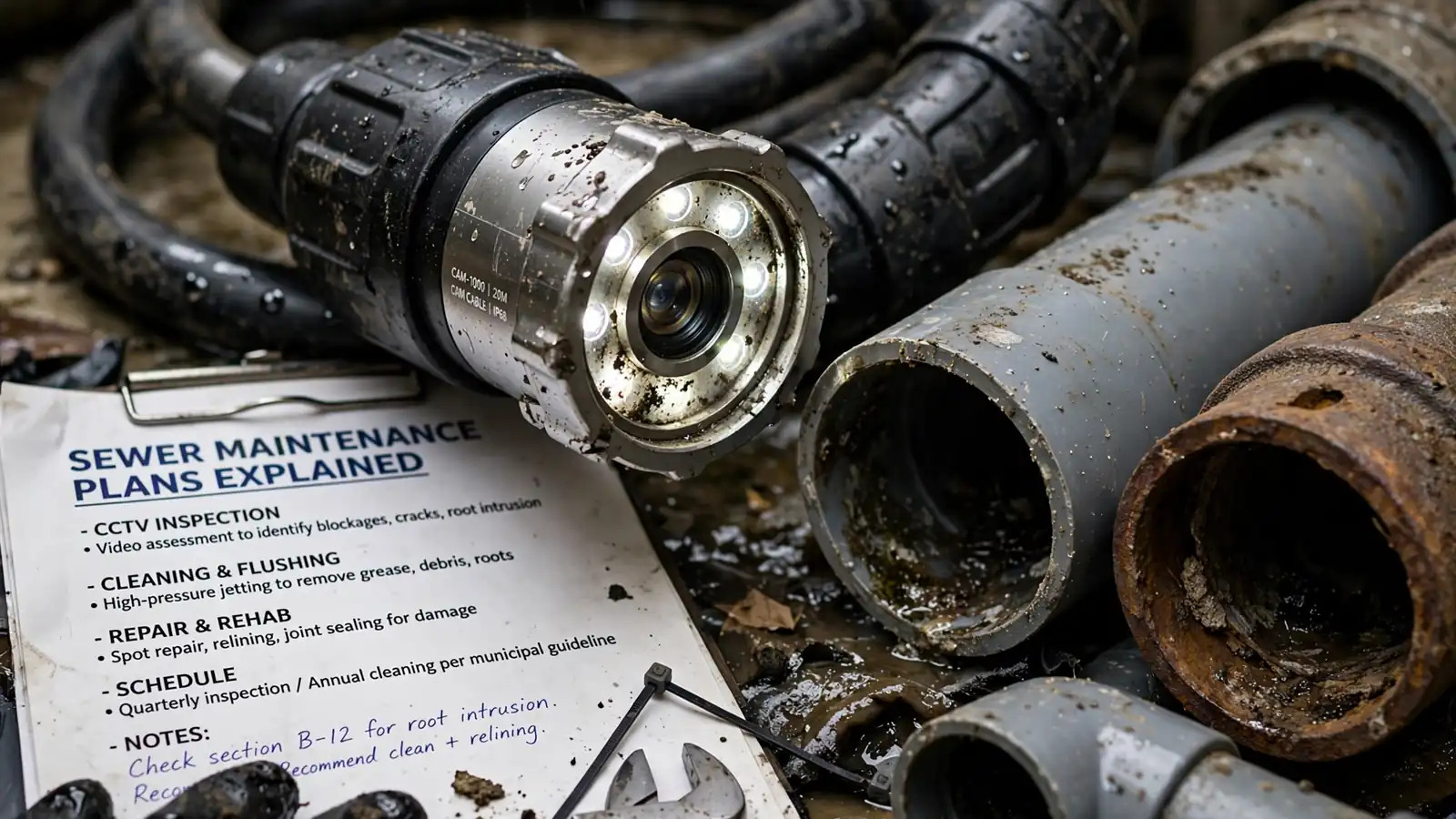
What plans are not: they are not repair subscriptions, not discount clubs for work you do not need, and not pressure vehicles. A genuine plan reports findings with footage and options — including 'your pipe is sound, see you at the next interval.' If a plan's visits consistently discover urgent repairs, the plan is a sales funnel; leave it.
The economics are straightforward: scheduled visits cost less than emergency calls, and both are dwarfed by water damage. For Marlborough-area homes, the plan follows the local patterns — root management on the farmhouse belt, descaling in the mill towns, infiltration monitoring by the lakes. Our sewer maintenance page details the offering; the baseline inspection is where every plan begins: (833) 713-2101.
The enrollment conversation sets the plan's honesty: a reputable provider starts with the baseline inspection before discussing intervals or pricing — the plan is prescribed from diagnosis, not sold from a brochure. If the plan is priced before the camera runs, the diagnosis is theater.
The exit terms matter as much as the service terms: no long lock-ins, intervals adjustable with evidence, and the baseline footage yours regardless. A plan confident in its value does not need contractual handcuffs.
The multi-property application extends the logic: landlords and HOAs run the same baseline-and-interval discipline across portfolios, with the documentation per property supporting capital planning. The plan scales from one lateral to many without changing its principles.
The Marlborough-area maintenance calendar has a local rhythm worth syncing to: pre-winter camera checks for properties with root history (roots slow in cold but the joints they opened don't close), spring assessments after the freeze-thaw cycle moves soil, and pre-listing inspections for anyone considering a sale within two years. A plan that follows this calendar catches the area's seasonal failure patterns instead of reacting to them.
Property managers with multi-unit portfolios in the area — the apartment blocks along Hudson's Main Street, the mixed-use buildings downtown — find that per-building plans beat a single portfolio contract: each building's era, pipe material, and root exposure differ enough that the intervals and methods should too. The plan is a document per property, not a blanket.
The documentation habit closes the loop: every maintenance visit should leave you with dated camera stills or video, a written condition note, and the next recommended interval — filed where you will find them when the property sells or the next issue arises. A maintenance plan without records is just a schedule; with records, it is an asset.
FAQ
Questions
Frequently Asked Questions
Review of your property's history, cleaning per the plan (jet, cable, or descale), post-service camera footage compared to baseline, findings reported with video, and the next visit scheduled. Typically one to two hours.
A genuine plan adjusts with the evidence — intervals tighten or loosen as the footage dictates — and you are never locked into unneeded visits. Ask about terms before enrolling; flexibility is the mark of an honest program.
The plan scales to risk: young pipe gets a baseline and infrequent checks. The baseline footage itself is the value — when something eventually changes, the comparison exists.
Scheduled care costs less per visit, precedes damage, and includes the trend monitoring that catches structural decline early. Reactive service follows damage at emergency rates — the math favors maintenance decisively.