A sewer easement is the legal right for a sewer line — yours, a neighbor's, or the municipality's — to cross a property, and it shapes who can access the pipe, who maintains it, and what you can build over it. This guide explains easements in plain language for Marlborough-area homeowners who discover one on their plot plan.
The common types: utility easements granted to the municipality for mains crossing private land; private easements between neighbors where one lateral crosses another's lot (common in older villages with party-wall construction); and implied easements from long-standing use. Your deed or plot plan shows recorded easements; the registry of deeds confirms them.
What an easement means practically: the easement holder can access the pipe for maintenance and repair — including excavation within the easement area. It does not mean they can use your whole yard, and it does not transfer ownership of the land. But it does restrict what you build over the pipe's corridor: structures, deep-rooted plantings, and permanent hardscaping over an easement are built at your risk.
The maintenance question — who fixes the pipe in the easement — follows ownership, not the easement: the lateral's owner maintains it up to the municipal connection, even where it crosses a neighbor's land via easement. Municipal mains in easements are the town's responsibility. The camera inspection documents where the pipe runs and who owns which section, which is the factual basis for every easement question.
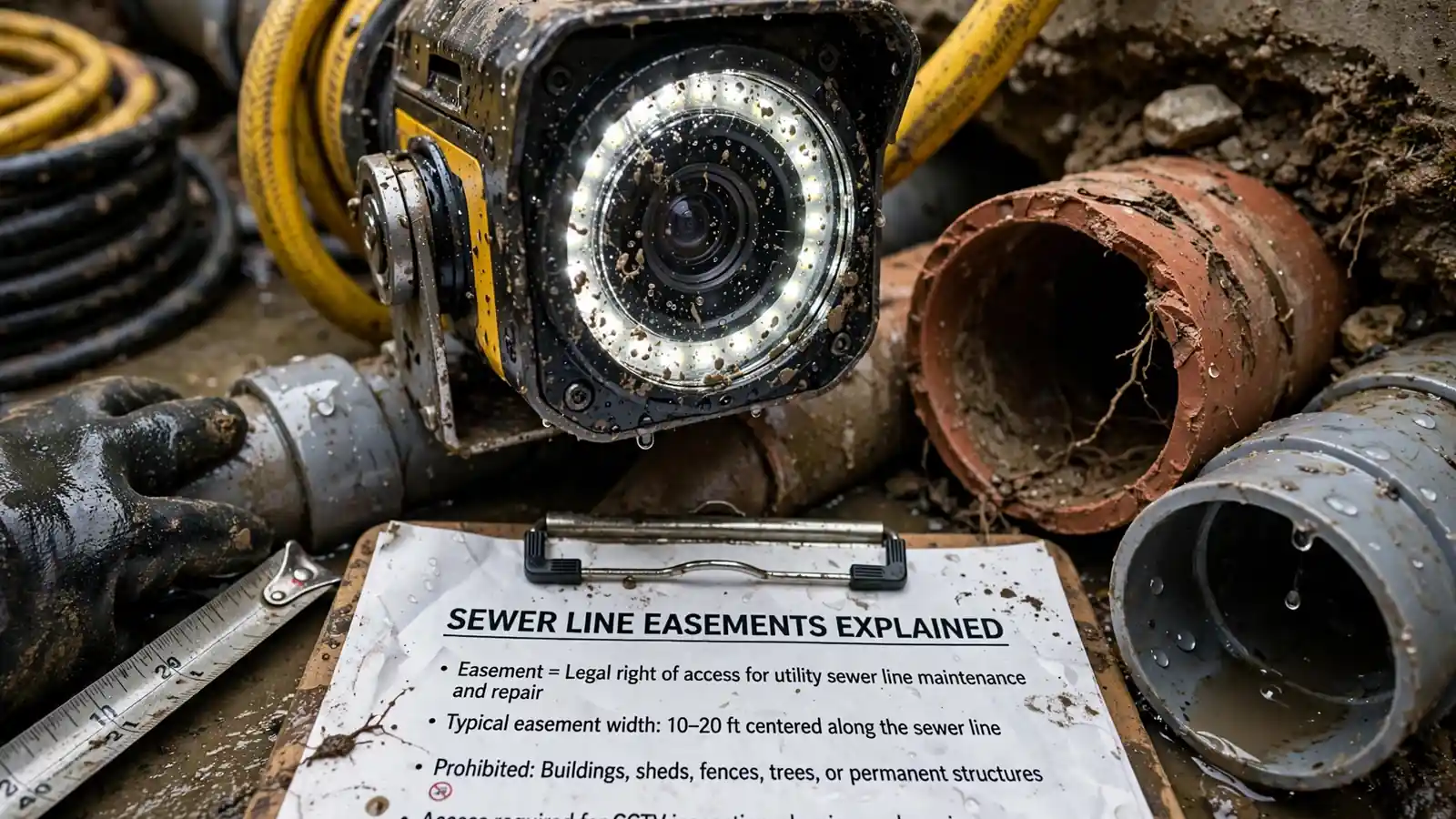
Before building — additions, garages, pools, major landscaping — check the plot plan for easements along the proposed footprint. Building over a lateral's easement invites a future excavation through your new structure; relocating the lateral first (or redesigning the project) is far cheaper than the alternative. Our sewer line installation page covers lateral relocation; our sewer camera inspection page covers mapping the pipe's actual path.
Disputes between neighbors over shared or crossing laterals are settled fastest with footage: the camera shows whose pipe, whose defect, and where the easement's pipe actually runs versus where everyone assumed. In downtown Marlborough's party-wall blocks and the older villages, these questions are common — and the camera answers them in an afternoon.
For buyers, the easement check belongs in due diligence alongside the camera inspection: know what crosses your prospective lot, who maintains it, and what it restricts. The plot plan plus the footage is the complete picture — legal and physical — of what you are buying into.
The title-search moment is when easements surface: the attorney's title work reveals recorded easements, and the buyer's job is understanding their practical impact before closing. An easement for a municipal main across the back lot is usually benign; a neighbor's lateral crossing the proposed addition's footprint is a planning factor.
Maintenance access etiquette keeps easement relationships functional: the holder notifies before non-emergency work, restores the surface afterward, and stays within the easement's bounds. Neighbors who communicate about the shared corridor avoid the disputes that the camera would otherwise have to settle.
Easement abandonment — when a rerouted or replaced lateral leaves an old easement obsolete — is a legal process worth completing: the recorded encumbrance affects title and resale even when the pipe is gone. The attorney handles it; the camera documents the reroute that justifies it.
Easement research in this area runs through the Middlesex County Registry of Deeds (southern) and Worcester County (northern towns) — and the older the property, the more likely the easement language predates modern sewer infrastructure, describing rights-of-way that now carry laterals. A title search that finds the easement is the first step; the camera survey that locates the pipe within it is the second.
FAQ
Questions
Frequently Asked Questions
Check your deed and plot plan, and confirm at the registry of deeds. The camera inspection then maps the pipe's actual physical path — legal record plus physical reality is the complete answer.
You can, but at your risk: the easement holder retains access rights, and a future repair could excavate through your structure. Relocating the lateral or redesigning the project is the prudent path — discuss it before building.
The pipe's owner — typically the homeowner up to the municipal connection — regardless of whose land the easement crosses. Municipal mains in easements are the town's. Footage documents the ownership facts.
The easement grants access for maintenance and repair within its bounds — not unlimited use of your yard. Keep the corridor clear, know the recorded terms, and call (833) 713-2101 if a dispute needs the camera's factual answer.