Finding a sewer leak without excavating the yard is a detection discipline with four main instruments — camera, smoke, acoustic, and dye — each with its territory. This guide compares the methods so you understand what a detection visit involves and why the technician chooses the tools.
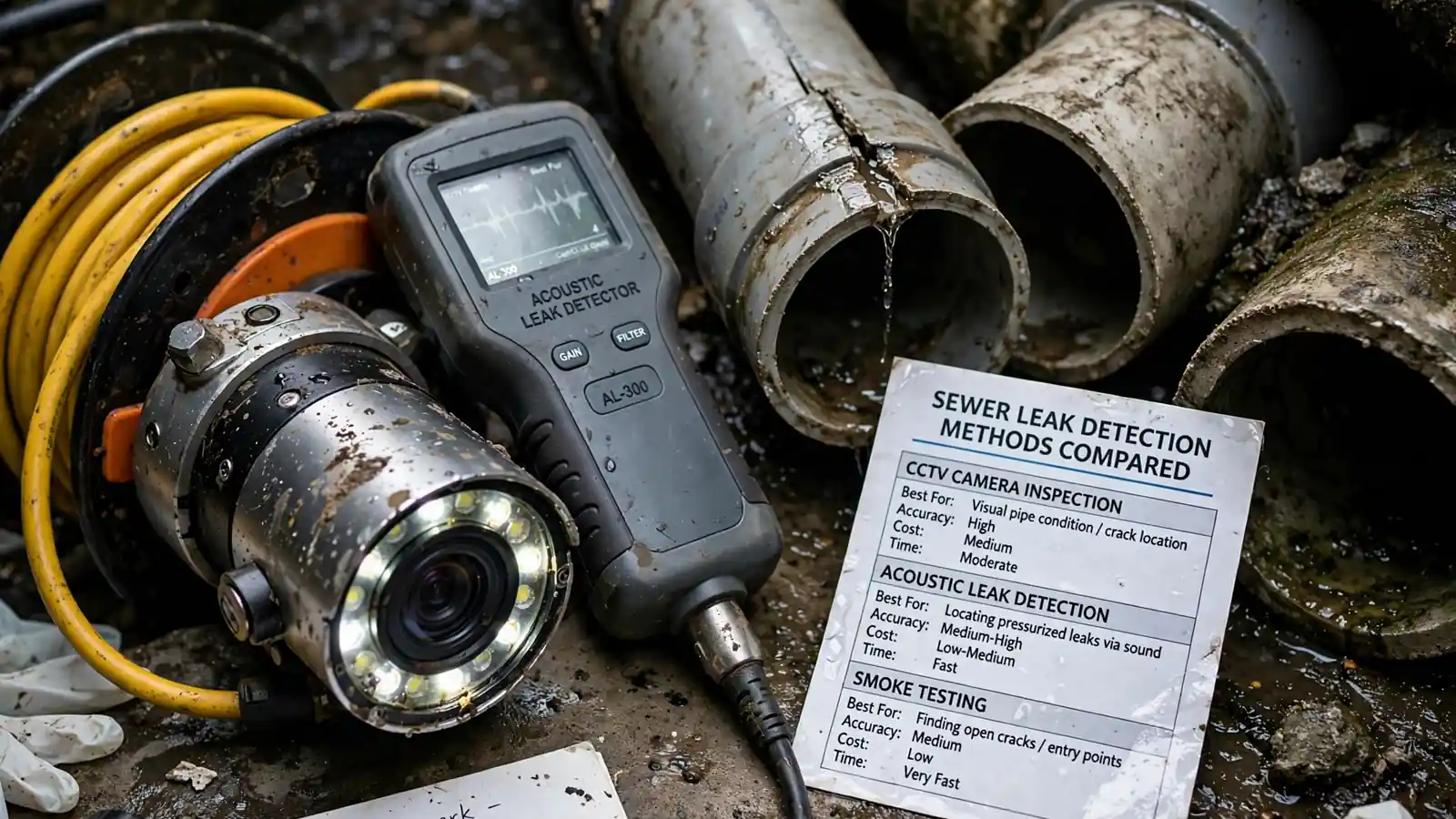
Camera inspection is the foundation: a waterproof head televised through the lateral shows cracks, separated joints, and active infiltration directly, with distance markers logging each defect. Nothing beats seeing the breach. The camera answers 'what and where along the pipe' definitively — and its footage becomes the repair plan's basis. Every detection visit starts here unless the symptom pattern points elsewhere first.
Smoke testing is the surface-revealer: non-toxic theatrical smoke is introduced into the system, and it exits exactly where the pipe is breached — at the surface, through a broken vent, or into the house through a dry trap. One test can map multiple breach points along a run, making it remarkably efficient for older clay systems with systemic joint failure. If smoke enters the living space, it has diagnosed a defect — ventilate and note the location.
Acoustic listening is the sound detective: sensitive microphones detect the hiss of water escaping under pressure or the gurgle of infiltration through defects. It excels on sections where the camera's view is limited and on pressurized segments, triangulating the source from multiple surface readings. It is the method that finds what the eye cannot see.
Dye tracing is the path-prover: fluorescent, non-staining dye introduced at a fixture follows the flow path to the leak, proving which drain feeds which breach. When the question is connectivity — 'does this fixture connect to that wet spot' — dye gives the definitive yes or no.
The methods are complementary, not competing: camera shows the defect, smoke maps the breaches, acoustic triangulates the inaudible, dye proves the path. A competent detection visit sequences them by the symptom — the interview about where, when, and in what weather shapes the instrument plan — and converges the findings on one marked leak point with depth.
In the Marlborough area, the method mix follows the housing: smoke testing shines on the farmhouse belt's systemic clay-joint failures; camera-led detection dominates the mill towns' cast-iron mysteries; lake neighborhoods add infiltration acoustics to the wet-season toolkit. Our sewer leak detection page details the service; the detection report — defect, location, depth, fix options — is the deliverable every method serves.
The detection report is the visit's real product: defect type, exact location with depth, the evidence each method contributed, and the scoped repair options. File it with your property records — it becomes the baseline for future work and the documentation for insurance or sale disclosures.
Intermittent leaks — the ones that appear only in wet weather or under specific usage — may need staged detection: the initial visit maps the suspects, and a return visit under the right conditions confirms. A professional says this upfront rather than declaring victory over an absent symptom.
The cost-effectiveness ranking favors the converged approach: one thorough visit with the right method sequence costs less than serial single-method visits that each miss the full picture. Ask how the methods will be sequenced for your symptom — the plan reveals the diagnostic thinking.
Leak detection in the Marlborough area contends with the region's high water tables — around the lakes and in the low-lying neighborhoods, groundwater infiltration can mask exfiltration leaks, requiring the technician to distinguish the two directions of water movement. The acoustic and camera methods each have groundwater blind spots; the experienced local technician knows which to trust in saturated soil.
FAQ
Questions
Frequently Asked Questions
The symptom interview decides: camera first in most cases, with smoke, acoustic, or dye added based on what the camera and symptoms suggest. The plan is explained before instruments come out: (833) 713-2101.
Yes — non-toxic theatrical smoke. If it enters the home it has found a defect (dry trap or broken vent), which is itself a diagnosis. We notify the household before testing.
Yes — the instruments work under slabs and pavement where digging-for-diagnosis would be destructive. Pinpointing comes first; the least invasive repair follows.
Converged methods — camera distance plus sonde locating plus test correlation — typically mark the leak within inches, with depth readings guiding the repair plan.