Sewer gas smells like rotten eggs, and the smell is a warning worth heeding — not just for comfort but for health. This guide covers what sewer gas is, what the odor signals about your plumbing, the health effects of exposure, and the fixes that eliminate both the smell and its cause.
Sewer gas is a mixture — hydrogen sulfide (the rotten-egg odor), methane, ammonia, and other compounds from decomposing waste. At low concentrations it is a nuisance; at higher concentrations or with prolonged exposure it causes headaches, nausea, dizziness, and eye and respiratory irritation. Very high concentrations can be dangerous, which is why persistent strong odors deserve prompt professional attention, not air freshener.
The smell's plumbing message is specific: sewer gas belongs in the pipes, and its presence in living space means the containment has failed somewhere. The usual suspects are dry traps (the water seal evaporated in an unused drain), cracked vents, failed wax rings at toilets, and — most seriously — breached sewer laterals or dry traps caused by blockage-induced pressure. Each has a distinct fix; the diagnosis determines which.
Dry traps are the simplest cause and the simplest fix: run water in unused drains — floor drains, guest bathrooms, basement sinks — to restore the water seal. If the smell disappears, that was it; make trap-priming part of the routine for little-used fixtures. If the smell persists, the cause is structural and needs professional diagnosis.
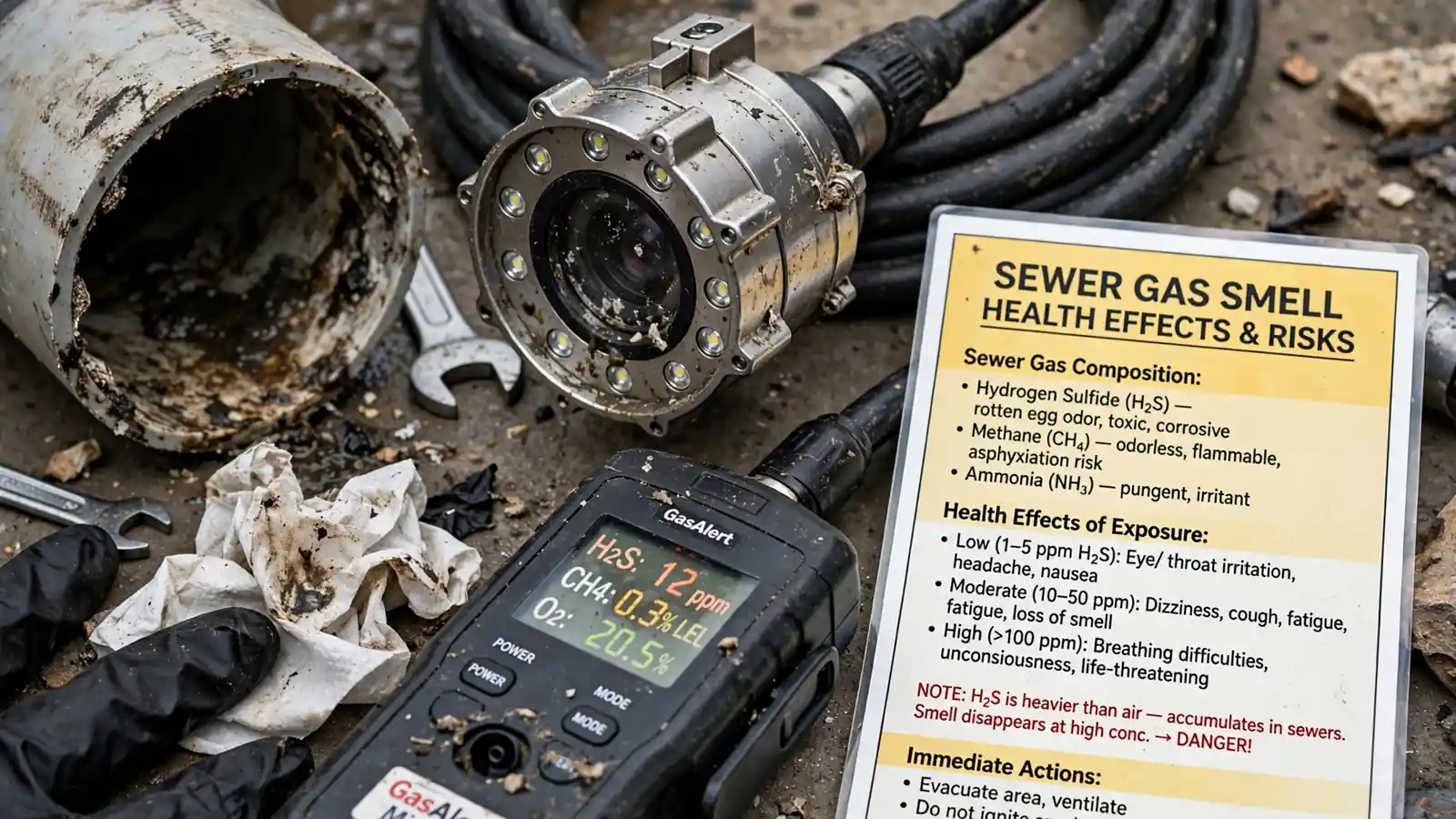
Persistent odor with slow drainage points to the lateral: a blockage forcing gas back through the system, or a breached pipe venting gas near the foundation. The camera inspection finds it — blockage, crack, or separation — and the fix addresses the cause rather than masking the symptom. Our sewer leak detection page covers the detection methods; our sewer line cleaning page covers the blockage side.
Health guidance is straightforward: ventilate the affected area, do not ignore strong or persistent odors, and keep vulnerable occupants — children, elderly, those with respiratory conditions — away from strong concentrations until the source is fixed. If odor is accompanied by symptoms, leave the area and seek fresh air; the plumbing can wait, health cannot.
For Marlborough-area homes, the seasonal angle matters: dry winter air evaporates traps faster, and heating systems can create negative pressure that pulls gas through marginal seals. Winter odor complaints often resolve to dry traps — but the ones that do not resolve deserve the camera, because winter is also when frost works the joints that later leak gas.
The olfactory-fatigue trap deserves warning: hydrogen sulfide deadens the sense of smell at higher concentrations — the odor fading does not mean the gas dissipated. If a strong sewer odor was present and then 'went away' without intervention, treat the absence as suspicious, ventilate, and investigate rather than assuming resolution.
Carbon monoxide confusion is worth ruling out: both are colorless gases with health effects, but CO is odorless — if you smell rotten eggs, it is sewer gas, not CO. Homes with fuel-burning appliances should maintain CO detectors regardless; the two hazards are separate and both deserve their instruments.
Long-term low-level exposure — the faint persistent odor that never quite clears — merits the same diagnostic seriousness as the dramatic event: chronic headaches, nausea, or irritation that improve away from home are the body reporting what the nose normalized. The camera finds the chronic source as reliably as the acute one.
The area's older housing — pre-1940 Victorians downtown, the mill-era homes in Hudson and Maynard — is where dry traps and failed seals most commonly produce sewer gas: floor drains in basements that haven't seen water in months, abandoned fixtures from renovations past, vent stacks compromised by decades of weather. The fix is usually simple once the source is located; the camera and a smoke test locate it definitively.
FAQ
Questions
Frequently Asked Questions
At the low concentrations of typical household odors, it is primarily a nuisance — but prolonged exposure causes headaches, nausea, and irritation, and high concentrations are hazardous. Persistent strong odors warrant prompt professional diagnosis, not masking.
If the cause was a dry trap, yes — restore the seal and make trap-priming routine for unused fixtures. If the smell returns, the cause is structural and needs diagnosis: (833) 713-2101.
Yes — a breached lateral near the foundation vents gas that enters through windows, vents, or foundation gaps. Outdoor odor near the lateral's path deserves the same camera investigation as indoor odor.
When the odor is strong, persistent, or accompanied by slow drainage or symptoms. The camera inspection finds the structural cause — blockage, crack, or separation — that air freshener cannot fix.