A sewer camera inspection is the highest-value hour in residential plumbing — a video survey of your lateral that replaces every guess about its condition with footage. This guide explains what happens during the visit, what the camera can and cannot show, and how to get the most from the appointment.
The visit starts with access. The technician locates your cleanout — the capped pipe giving direct lateral access — or, where none exists, pulls a toilet for entry (done cleanly, with drop cloths and disinfection, the fixture reset and tested afterward). No digging is involved; the inspection is entirely non-invasive.
The camera run itself is straightforward to watch and fascinating the first time: a waterproof head on a push rod travels the lateral to the municipal main while you watch the live feed. The technician narrates — 'roots at 34 feet, offset joint at 52, the main at 78' — and the footage counter stamps every finding with its distance. What looks like television is actually measurement.
What the camera shows: roots entering at joints (pale fibrous masses), cracks and separations, bellies holding standing water (visible as flat reflective surfaces), cast-iron scale narrowing the bore, collapsed sections where the camera stops, pipe material transitions, and the municipal tie-in's condition. Infiltration — groundwater visibly entering — shows too, which is why wet-weather timing can be diagnostically useful.
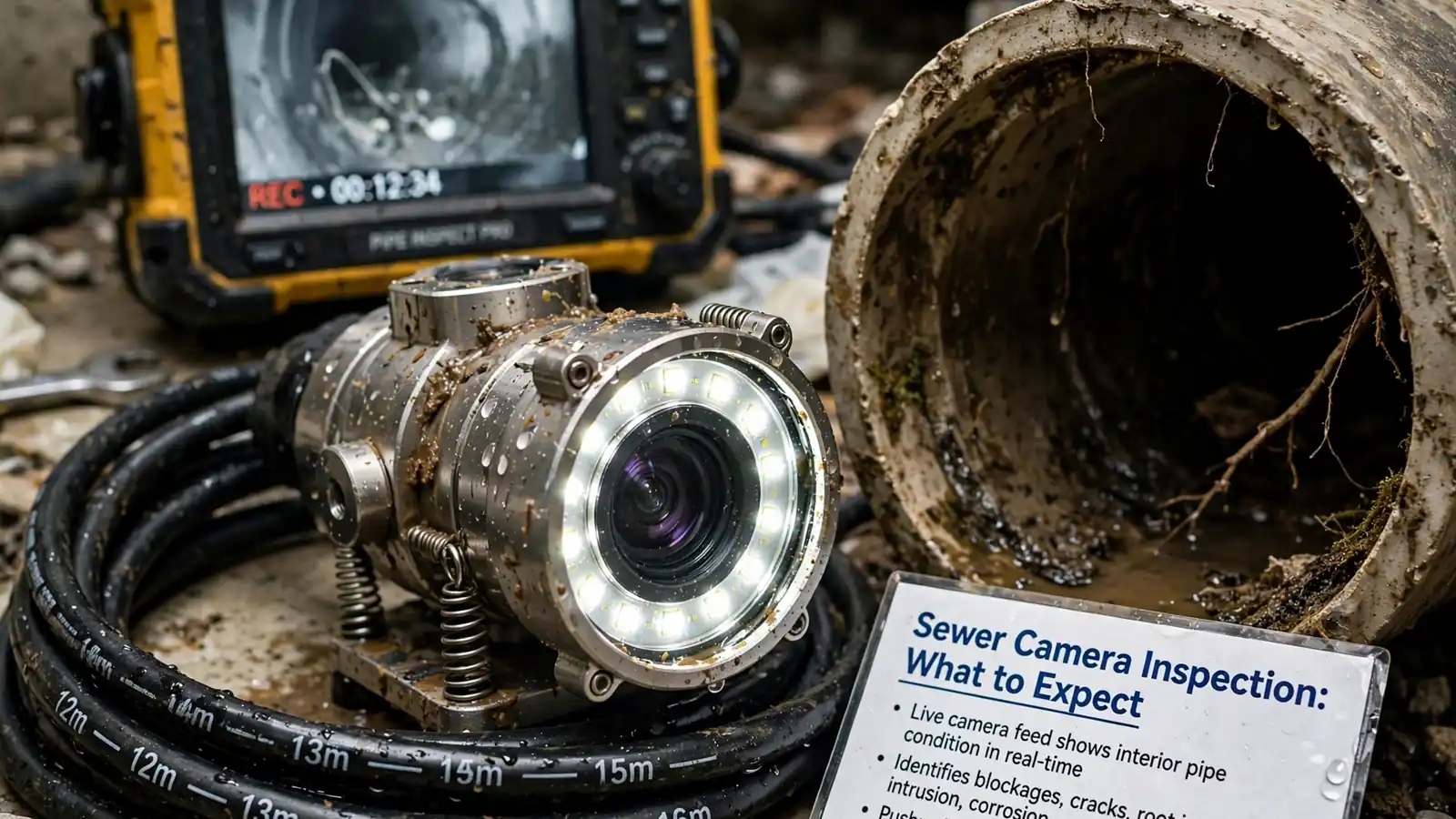
What the camera does not show: the pipe's exterior condition, soil voids around the pipe (though their effects show), or the future — the footage is a condition report, not a prophecy. It also cannot see through a fully blocked line, which is why the technician relieves blockages before inspecting.
The sonde locator adds the second dimension: a signal from the camera head read above ground marks each major defect's surface position and depth. 'Roots at 34 feet' becomes a paint mark on the lawn with a depth reading — the information that makes any future excavation surgical instead of exploratory.
You should receive three things: the video file, a written condition summary with defect distances, and prioritized recommendations. Watch the footage with the technician and ask questions — 'show me the worst joint,' 'is that belly significant,' 'what would you do first.' The inspection's value is proportional to your understanding of it.
In the Marlborough area, the inspection's local value is high: clay laterals under the farmhouse belt, cast iron in the mill towns, slab-era pipe under Nobscot's concrete, lake-area infiltration — every local pattern is a camera pattern. Our sewer camera inspection page details the service; schedule before buying, before repairing, or on the maintenance interval the footage sets.
Timing the inspection strategically multiplies its value: pre-purchase (before the contingency expires), pre-repair (before any quote), post-cleaning (to see what the blockage hid), and on the maintenance interval the footage sets. The same camera serves four different decisions across a lateral's life.
The report's recommendation section deserves careful reading: 'repair now' versus 'watch' versus 'maintain' are different urgency levels, and a trustworthy report distinguishes them explicitly. Ask which findings are urgent, which are monitoring items, and what changes the category — the answers turn a video into a plan.
Second opinions on footage are legitimate and inexpensive: the video file is portable, and another professional can review it without a second site visit. If a recommendation feels disproportionate to what you saw, get the footage reviewed before authorizing the work.
In the Marlborough area, the camera inspection often reveals the property's era in the pipe: clay with root intrusion on the farm-belt properties, scaled cast iron in the mill-town neighborhoods, offset joints in the frost-heave zones. The technician reading your footage is also reading your property's history — and the recommendations that follow are calibrated to both.
FAQ
Questions
Frequently Asked Questions
Locate your cleanout if you know where it is; clear access to it and to the basement or crawl area. Otherwise just be present — the technician handles the rest. No digging, no preparation beyond access.
No — the head is designed to travel through laterals without harming them. If the camera cannot pass, that is itself a diagnosis (collapse or severe deformation), not damage caused.
Most residential laterals inspect in under an hour once access is established. You will have findings, footage, and recommendations before the technician leaves.
Yes — watching the live feed with narration is the fastest education in your lateral's condition, and your questions improve the recommendations. The footage is yours either way.