Standard homeowners insurance typically excludes sewer backup — the exclusion surprises homeowners exactly when they need coverage most, standing in a flooded basement learning that 'water damage' and 'sewer backup' are different perils with different endorsements. This guide explains the coverage landscape, the documentation that supports claims, and the prevention that insurers reward.
The core distinction: homeowners policies generally cover sudden water damage from burst supply pipes but exclude water backing up through sewers and drains — unless you carry the sewer backup endorsement (sometimes called water backup coverage). The endorsement is inexpensive relative to the peril, and it is the single most important insurance decision for homes with aging laterals.
What the endorsement typically covers: damage to the structure and belongings from backed-up sewer water, plus cleanup costs — up to the endorsement's limit, which is often lower than the policy's dwelling limit. What it typically does not cover: the lateral repair itself. The insurance fixes the damage the failure caused; the pipe remains the owner's responsibility. Understanding that split prevents the second surprise.
Documentation makes or breaks the claim. Photograph everything before cleanup — water lines on walls, affected belongings, the backup's extent — with timestamps. Keep the camera inspection footage showing the failure's cause; insurers distinguish sudden blockages from long-deferred maintenance, and the footage proves which one you had. Save all receipts: emergency service, water extraction, remediation, and repairs.
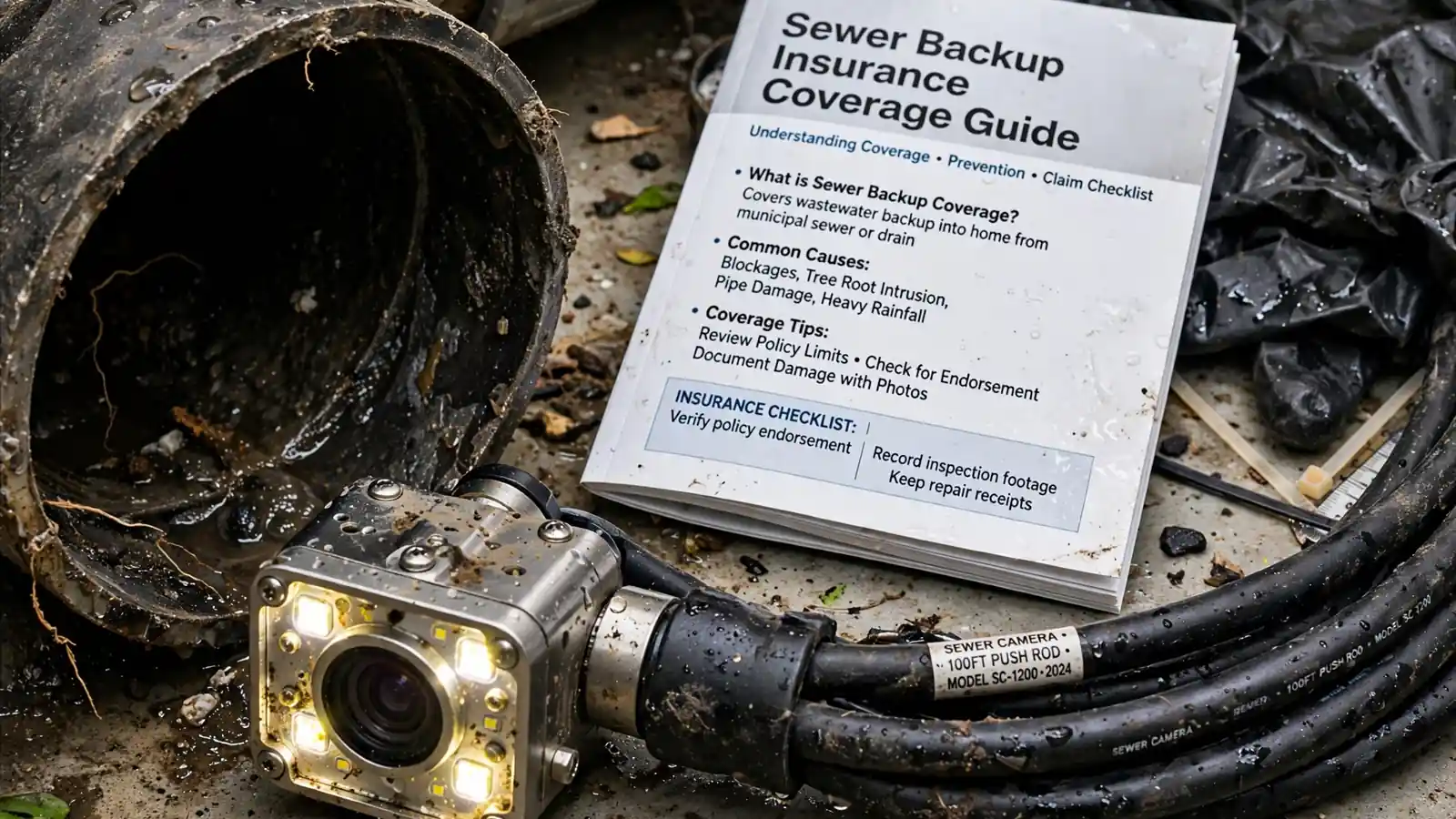
The claims process rewards promptness and punishes delay: notify the insurer immediately, mitigate further damage (the policy requires it), and keep records of every interaction. If the backup involved the municipal main — neighbors affected simultaneously — document that too; liability and coverage questions shift when the town's system is implicated.
Prevention is the coverage conversation insurers want to have: backwater valves (which prevent municipal surges from entering the home), scheduled lateral maintenance, and the camera baselines that prove diligent upkeep. Some carriers view documented maintenance favorably; all of them view neglected laterals as the owner's problem. Our sewer maintenance page covers the prevention program; our emergency sewer repair page covers the first hour when prevention fails.
For Marlborough-area homeowners, the action items are concrete: check whether your policy carries the backup endorsement (call your agent — do not assume), consider a backwater valve if your lateral is vulnerable to municipal surges, and establish the camera baseline that proves your maintenance diligence. The endorsement costs little; the uncovered backup costs enormously.
The endorsement's limit deserves scrutiny: backup coverage often caps far below the policy's dwelling limit — a $10,000 endorsement against a $40,000 basement finish-out is a gap you should know about before the water rises. Review the limit against your basement's actual exposure and adjust it deliberately.
Renters and condo owners face the same peril with different paperwork: renters need contents coverage with the backup endorsement for their belongings; condo owners need to understand where the association's master policy ends and their HO-6 begins — the lateral-to-unit boundary determines whose endorsement answers. The conversation with the agent is the same: 'am I covered for sewer backup, and to what limit.'
Claim-adjacent costs add up beyond the obvious: temporary housing during remediation, the deductible, and the uncovered lateral repair itself. The endorsement softens the blow; it rarely eliminates it. The financial plan for a backup includes the coverage and the gaps — known in advance, not discovered after.
Massachusetts homeowners should know the state-specific context: standard HO-3 policies here exclude sewer backup without the endorsement, the endorsement's limits are frequently inadequate for finished basements (common in the area's housing stock), and the documentation standard — camera footage distinguishing sudden failure from wear — is what adjusters apply. Review the endorsement before the backup, not after.
FAQ
Questions
Frequently Asked Questions
Typically no — sewer backup is a standard exclusion, covered only by a separate endorsement. Check your policy now, before you need it; the endorsement is inexpensive.
Usually not — backup endorsements cover the resulting damage and cleanup, not the lateral repair itself. The pipe remains the owner's responsibility; the damage it caused is the covered peril under the endorsement.
Timestamped photos before cleanup, the camera footage showing the cause, and receipts for every service — emergency, extraction, remediation, repair. The footage distinguishes sudden failure from deferred maintenance.
If your lateral is vulnerable to municipal surges — low-lying areas, history of main-related backups — yes. It is the mechanical prevention that the insurance cannot provide, and it protects regardless of coverage.