Sewer repair disrupts the yard in proportion to the method — and the right preparation, matched to the method, keeps the disruption minimal and the restoration clean. This guide covers how to prepare for trenchless work, for open excavation, and for the access needs that both share.
First, know your method before you prepare. Trenchless lining needs only access points — clear the cleanout areas inside and out, and ensure the crew can reach them. Pipe bursting needs two pits — the survey marks their positions, and preparation means clearing those specific areas: moving plantings, patio furniture, and anything fragile within the work zone. Open excavation needs the full corridor — the most preparation, and the method where advance work pays the most.
Document the before. Photograph the yard, the driveway, plantings, and hardscaping along the work corridor before the crew arrives — date-stamped, from multiple angles. Good contractors document too, but your own record is the definitive baseline if restoration questions arise. Note irrigation lines, invisible pet fences, landscape lighting cable, and any buried features the crew should know about.
Move what matters. Potted plants, garden ornaments, children's play equipment, and anything breakable within the work zone should be relocated before mobilization — not during it. For prized plantings over the corridor that cannot be moved, discuss protection with the crew in advance: trenchless methods preserve them by design, but communication ensures it.
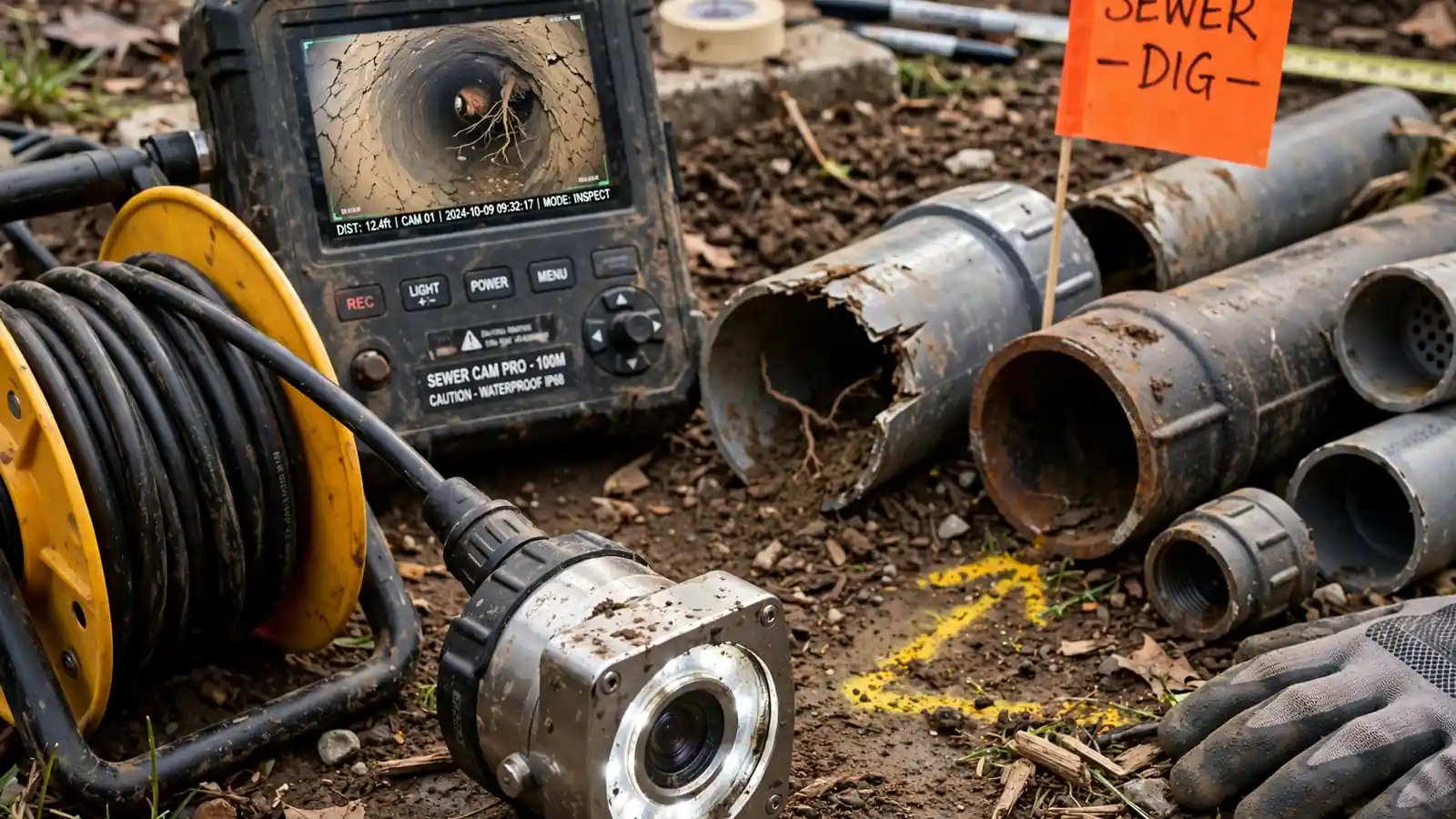
Plan access and parking. The crew needs equipment near the work area and a path for it — clear the driveway, unlock gates, and keep pets and children away from the work zone during operations. If the lateral runs under a shared driveway or near a property line, notify the neighbors before work starts; the courtesy prevents the conflict.
For open excavation specifically, discuss restoration in writing before digging: backfill compaction in lifts, topsoil replacement, seeding or sod, pavement repair specs. Restoration is where excavation projects succeed or fail in the homeowner's memory — the pipe is invisible, the yard is not. Our trenchless sewer repair page explains how trenchless methods shrink this entire preparation list; our sewer line replacement page covers full-project scoping.
Seasonal timing matters in MetroWest. Frozen ground complicates excavation and restoration; spring's wet soils challenge trench stability; summer and early fall are the kindest windows for open work. Trenchless methods are less season-sensitive — another quiet advantage. Schedule with the ground's calendar in mind, not just yours.
After the work, walk the restoration with the crew: verify grading, check that plantings were protected, confirm the corridor drains properly, and keep the documentation — footage, scope, restoration terms — with your property records. The yard recovers; the records should too.
The communication plan with the crew multiplies preparation's value: walk the property together before work starts, point out the buried features your documentation captured, agree on the work-zone boundaries, and establish the daily check-in. An informed crew protects what you value; an uninformed one protects only what it sees.
Children and pets need their own preparation: the work zone is an active construction area with equipment, open pits, and hazards that curiosity does not respect. Plan their space away from the work for the project's duration — the crew will barricade, but separation is the household's job.
The restoration walkthrough deserves the same seriousness as the pre-work documentation: compare against your before photos, check grading and drainage along the corridor, verify plantings and hardscaping, and confirm the cleanout locations for future maintenance. Sign off only when the comparison satisfies you.
Marlborough-area yards present specific preparation considerations: the mature tree canopy that defines neighborhoods from Bolton to Sudbury (root zones to protect, arborist consultation for specimen trees), the stone walls that are both landscape features and property-line markers (document before work, restore after), and the irrigation and invisible-fence systems common in the subdivisions (locate and mark before excavation). The preparation walkthrough should inventory all three.
FAQ
Questions
Frequently Asked Questions
Method-dependent: lining typically disturbs only access points; bursting needs two pits; excavation opens the corridor. The pre-work survey marks the exact footprint — ask for it in writing before mobilization: (833) 713-2101.
Move what is movable before the crew arrives; discuss protection for what cannot move. Trenchless methods preserve plantings by design, but advance communication ensures nothing is assumed.
Mark and disclose all buried features before work — irrigation lines, pet fences, lighting cable. The crew plans around known features; unknown ones get discovered the hard way.
Summer and early fall are kindest for excavation and restoration; trenchless methods are less season-sensitive. Emergency work happens whenever it must — planned work picks its window.