Pipe bursting is the trenchless method that replaces a sewer lateral without digging it up — fracturing the old pipe outward while pulling a new pipe through the same underground corridor. This guide explains how it works, when it fits, and how to tell whether a contractor's bursting proposal is sound.
The operation needs two pits: a launch pit at one end of the failed run and a receiving pit at the other. Between them, the ground stays closed. A hardened bursting head — slightly larger than the old pipe's diameter — is drawn through the existing line by hydraulic power, shattering clay, concrete, cast iron, or Orangeburg outward into the surrounding soil. Trailing the head comes the new pipe: high-density polyethylene, heat-fused into a single jointless run before the pull begins.
The jointless result is the engineering point. Every lateral fails at its joints eventually — roots enter there, offsets form there — so a replacement with no joints eliminates the failure mode that destroyed its predecessor. The HDPE is also upsizable: because the head displaces soil outward, the new pipe can be a larger diameter than the old, adding capacity where the original was undersized.
Candidacy is the critical question, and it has four parts. The path must be definable from pit to pit. Utilities crossing the corridor must be located and cleared — the head goes where the old pipe went, and anything else in that ground must be known. The soil must displace: dense till is ideal, solid ledge can stop a head cold. And pits must fit at both ends with access for the rigging. The camera inspection plus the site survey verify all four before bursting is promised.
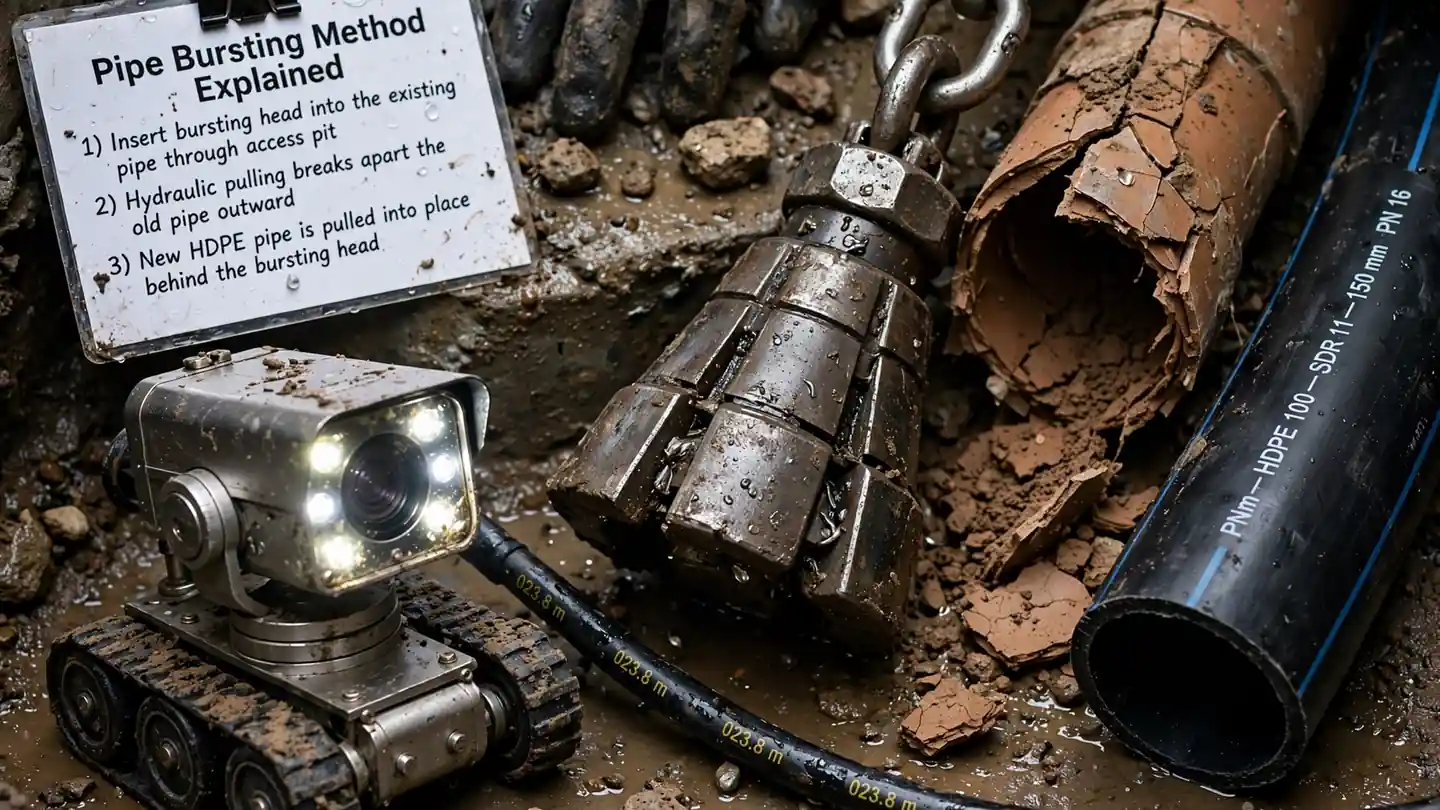
What bursting handles that lining cannot: collapsed sections (bursting needs no intact host pipe), bellies holding water (the new pipe is installed at proper grade), Orangeburg deformation, and capacity upsizing. What rules bursting out: shallow bedrock, unmarked utility conflicts, no pit access, or a corridor that cannot be defined. Honest contractors state the disqualifiers alongside the advantages.
In the Marlborough area, bursting is the hero method for specific ground: the drumlin till under Hudson, Stow, and Indian Head displaces cleanly; downtown's tight lots fit pits where they cannot fit trenches; farmhouse lanes in Bolton and the Chapinville area renew under stone walls without disturbing them. Our pipe bursting page covers the service; our Pipe Bursting in Hudson page shows the method on its most natural ground.
Vetting a bursting proposal: demand the camera footage with the burst path marked, ask how utilities were verified, ask about soil conditions along the run, and confirm the new pipe's diameter and material in writing. The proposal should read like engineering — path, pits, pipe, verification — not like a sales pitch.
The HDPE pipe itself deserves specification attention: high-density polyethylene, heat-fused into continuous runs, rated for the application — the material is the same family trusted for gas distribution and municipal water. Its jointless nature is the engineering point, but its toughness, flexibility, and chemical resistance are the supporting cast.
The pullback force is the operation's critical variable: enough to fracture the old pipe and draw the new one, controlled enough not to damage the corridor or nearby utilities. Hydraulic rigs with pressure monitoring provide the control; the operator's experience provides the judgment. Ask how the pull force is monitored — the answer reveals the operation's professionalism.
Post-pull verification closes the job: the new pipe is camera-inspected end to end, connections at house and main are confirmed, flow is tested, and the footage becomes your documentation. The verification is not a courtesy — it is the proof that the invisible work was done right.
FAQ
Questions
Frequently Asked Questions
The corridor is surveyed and utilities located and verified before the pull — the head follows the old pipe's path, and anything crossing it must be known and cleared first. Verification before mobilization is the safety standard.
Sized for the rigging and the pipe — typically compact excavations at each end of the run, a fraction of an open trench's footprint. The site survey positions them for access and minimal surface impact.
Usually yes — upsizing is a distinctive bursting advantage. The head displaces soil outward, allowing a diameter step-up where the original was undersized, with the municipal tie-in confirmed to accept it.
Shallow bedrock can stop a bursting head — the pre-work survey identifies it before bursting is promised. Where ledge rules it out, excavation or rerouted approaches are engineered honestly instead.