Commercial sewer systems fail differently than residential ones — more volume, more grease, more fixtures, more stakeholders — and they need a service model built for those differences. This guide covers what commercial sewer line service actually includes, how it differs from residential work, and what property managers in the Marlborough area should expect from a competent provider.
The load profile is the first difference. A restaurant pushes grease and food solids daily; an office stacks dozens of fixtures on shared risers; a retail plaza combines long horizontal runs with heavy foot traffic above. Residential methods applied to these loads underperform — commercial service means hydro jetting sized for grease, crawler cameras for large diameters, and descaling for cast-iron risers.
Scheduling is the second difference. Businesses cannot lose operating hours to plumbing, so commercial work happens around the operation — early mornings, nights, weekends. Emergency response runs 24/7 regardless, because backups do not respect business hours. The provider who cannot work around your schedule is the wrong provider.
Documentation is the third difference and the one most often missing. Property managers need video with distance markers, written condition reports, and prioritized recommendations — for budgeting, owner reporting, insurance, and the landlord-tenant questions that shared lines always raise. Every commercial visit should produce this paper trail; if it does not, you hired a residential plumber for a commercial job.
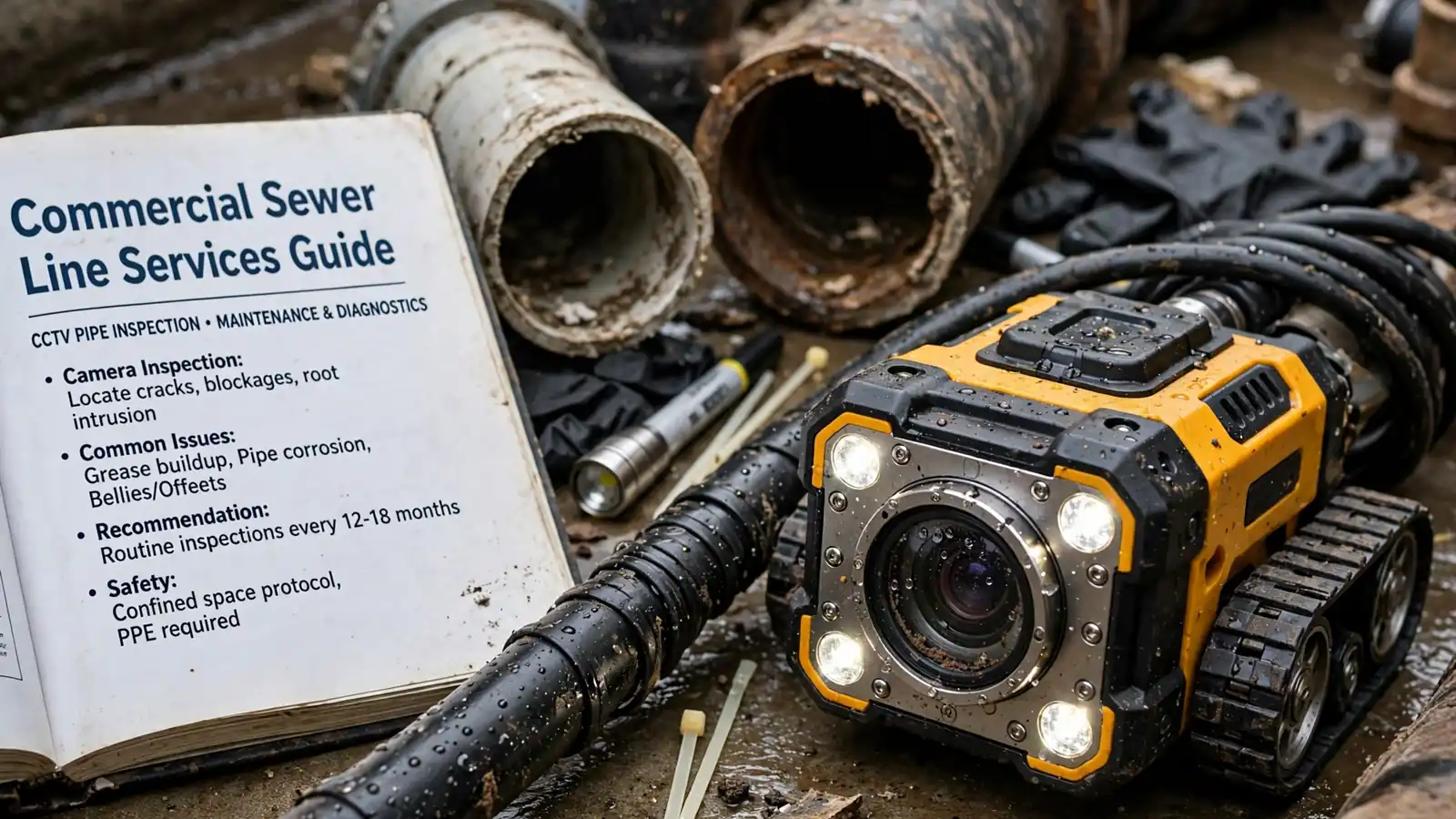
The maintenance contract is the commercial model's core: scheduled jetting intervals set from camera evidence, periodic inspections, and the predictable operating cost that replaces emergency spending. Our commercial sewer services page details the offering; Westborough's Route 9 corridor is the area's clearest example of the contract model working at scale.
Grease deserves its own section because it drives most restaurant service. Fats, oils, and grease cool and plate onto pipe walls, trapping food solids until the bore chokes — and the fix is hot-water hydro jetting on a schedule, not cabling when it blocks. The interval follows the camera: heavy plating shortens it, clean lines with maintained interceptors lengthen it.
For multi-tenant buildings, the camera survey's mapping function is essential: which tenant ties in where, where the defect sits relative to each connection. That footage settles responsibility questions in minutes that would otherwise consume weeks of dispute. Scope the mapping before the failure, not after — a baseline survey of a healthy system is the cheapest dispute insurance available.
Vetting a commercial provider comes down to four questions: Do they camera-inspect before recommending? Do they document with video and reports? Can they work around operating hours? Do they offer scheduled maintenance or only emergency response? Four yeses is a commercial provider; anything less is a residential shop in commercial clothing.
The RFP and bidding process for commercial sewer work deserves a note: scope commercial bids from camera footage, require video documentation deliverables in the contract language, and specify response-time tiers for emergencies versus scheduled work. The cheapest bid without documentation requirements buys you the least information — and information is half the product.
Tenant improvement and buildout cycles are the natural inspection points: before new walls close, camera the lateral serving the space, verify capacity for the new fixtures, and establish the baseline the next tenant's negotiation will reference. Buildout plumbing without lateral verification is a gamble with the landlord's money.
For Marlborough-area property managers, the local vendor question matters: a provider serving the full area — from Westborough's corridor to downtown's mixed-use blocks — brings pattern knowledge across property types. The restaurant's grease problem and the office's riser problem are different disciplines; the commercial provider handles both.
The Marlborough-area commercial corridors — the Route 20 restaurant strip, Westborough's office parks, Hudson's Main Street mixed-use — each generate distinct lateral demands: grease and high-temperature discharge from food service, low-flow patterns from office buildings that let solids settle, and the combined-load complexity of mixed-use. The commercial provider serving this area calibrates maintenance to the corridor, not just the building.
FAQ
Questions
Frequently Asked Questions
Scheduled jetting at camera-set intervals, periodic camera inspections, emergency response terms, and documentation — video plus written reports — for every visit. The contract should convert emergency spending into predictable operating cost, not just prepay emergencies.
Set from camera evidence of grease plating: high-volume kitchens typically land quarterly to semi-annual. We scope the line first and recommend the interval the footage supports — call (833) 713-2101.
Yes — off-hours scheduling is the commercial standard, and trenchless methods keep parking and entrances open. Emergency work happens whenever the failure happens.
Every visit: recorded video with distance markers plus a written condition summary. It is the paper trail management, owners, and insurers expect.